


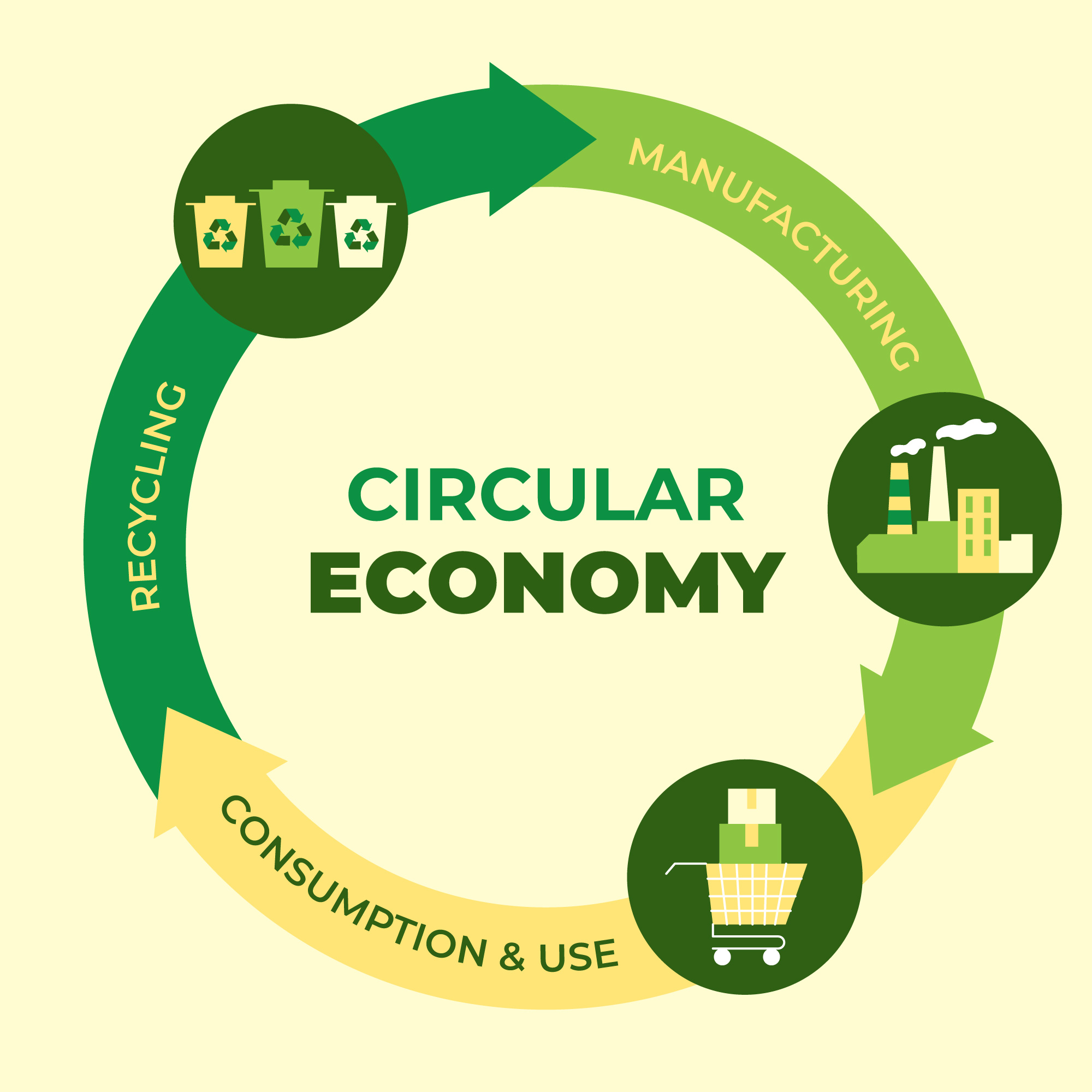
The Circular economy is a A development model that rethinks how we produce, consume, and reuse resources. Instead of following the linear “take-make-use-dispose” model, it promotes closed loops, resource efficiency and social innovation.
This makes particular sense in rural environments, where the challenges of depopulation, access to infrastructure, and environmental sustainability require local, creative, and viable long-term solutions.
Why is the circular economy important in rural areas?
- Reduction of local waste
Implementing practices of reuse, composting, local recycling, and product repair prevents valuable materials from ending up as waste. In addition to reducing environmental impact, this also serves to generate local micro-businesses focused on repair, reuse, or waste transformation. - Agro-innovation and bioeconomy
In rural areas, unique raw materials exist: agricultural, forestry, or livestock waste. Applying circular economy models allows these waste products – or by-products – to be converted into new resources: fertilisers, biogas, bioplastics, or construction materials. This boosts the local bioeconomy, creates jobs, and reduces reliance on external inputs. - Energy autonomy and local savings
The circular economy aligns very well with renewable energy. For example, using local biomass, organic waste, or solar installations to generate energy that stays within the community reduces costs, emissions, and reliance on external grids. Being linked to self-consumption and energy communities strengthens the local social and economic fabric. - Social innovation and green entrepreneurship
Circular models require new forms of organisation: repair cooperatives, material exchange platforms, collaborative consumption networks, rental services instead of purchasing. This opens up avenues for entrepreneurship for young people in rural areas, with a direct impact on their territory. - Resilience in the face of climate change and global crises
By reducing reliance on external resources and closing production cycles (e.g., water reuse, distributed energy, material reuse), rural populations can be better prepared for climate crises, energy price hikes, or agricultural input costs.
ENERYOUTH: Training to lead the circular economy in rural areas
The Project ENERYOUTH is key for young people in rural areas interested in leading these types of transformations:
- ENERYOUTH is a European initiative that empowers young people from rural areas to lead the transition towards a more sustainable economy, through renewable energies and circular economy models.
- Offer a Free online course, co-funded by the European Union, especially for young people.
- The course is now available and its approximate duration is 10 hours.
If you are interested in training in Circular economy, green entrepreneurship and renewable energy, We invite you to register for this free course. It is a great opportunity to gain practical knowledge, connect with other young people in rural areas and actively participate in building a sustainable future.